Birdwatching routes
Cabezo Gordo viewpoint route
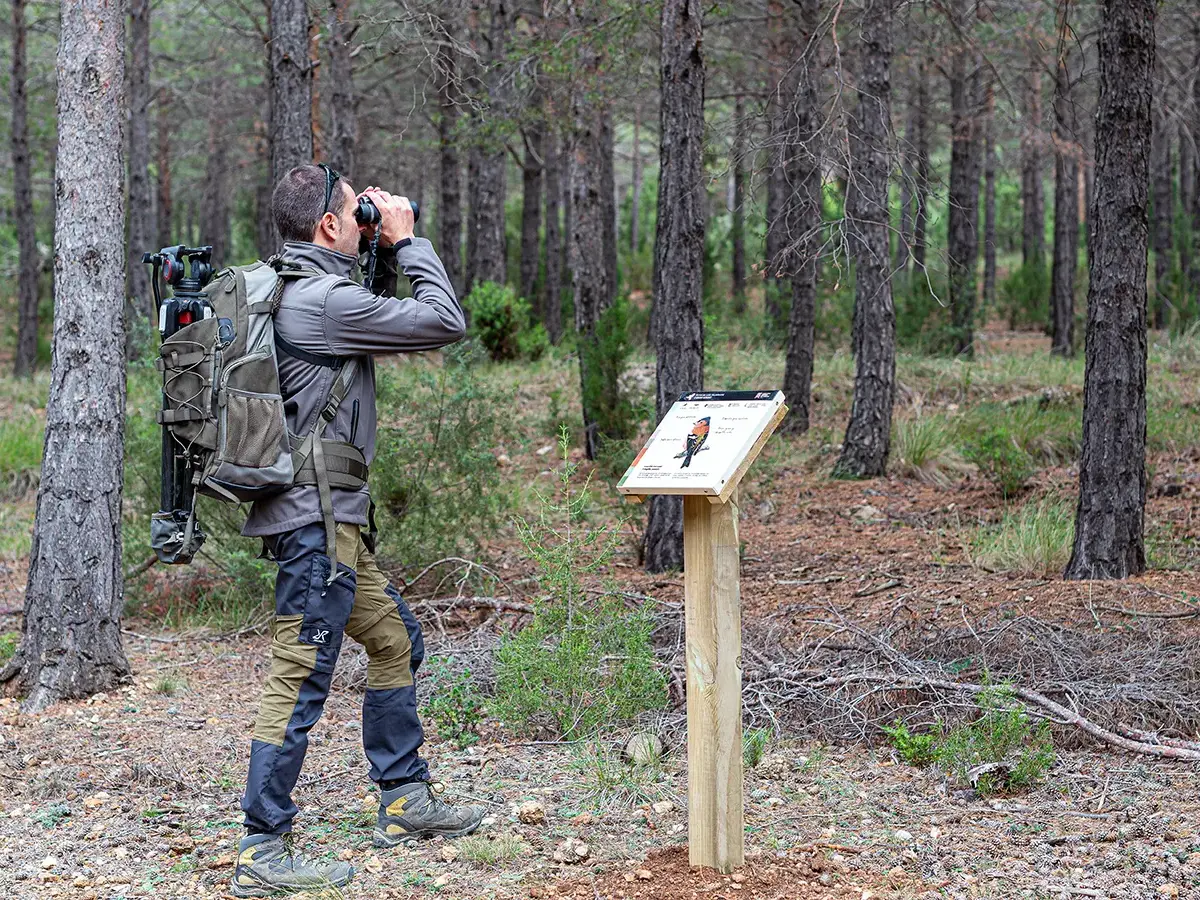
RECOMMENDATIONS
 The welfare of the animals must come before all other considerations of any observer, amateur or professional.
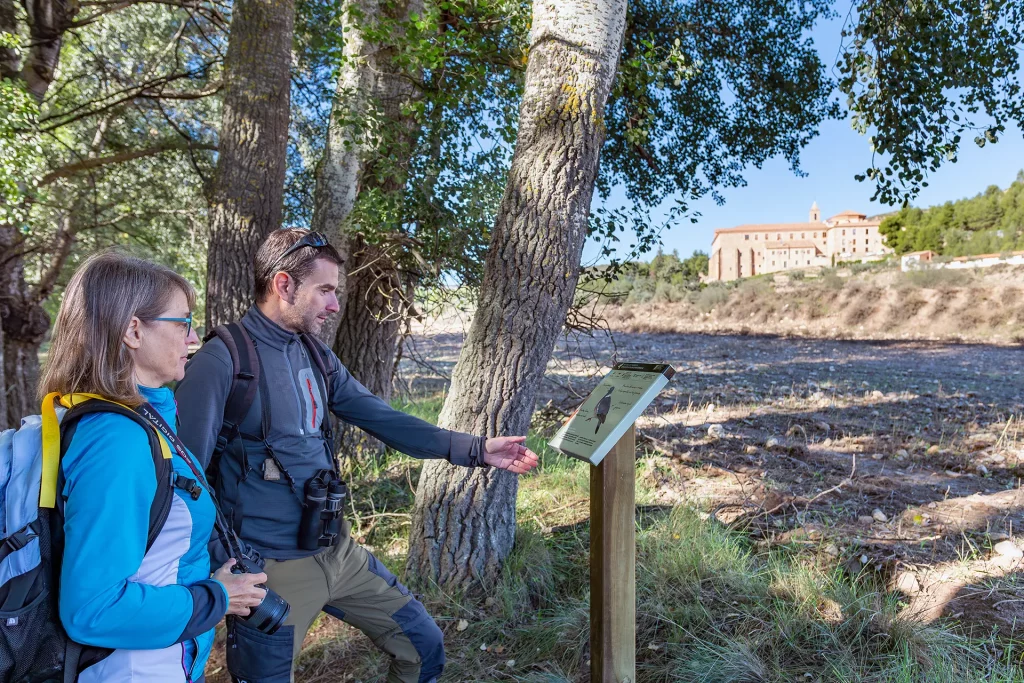
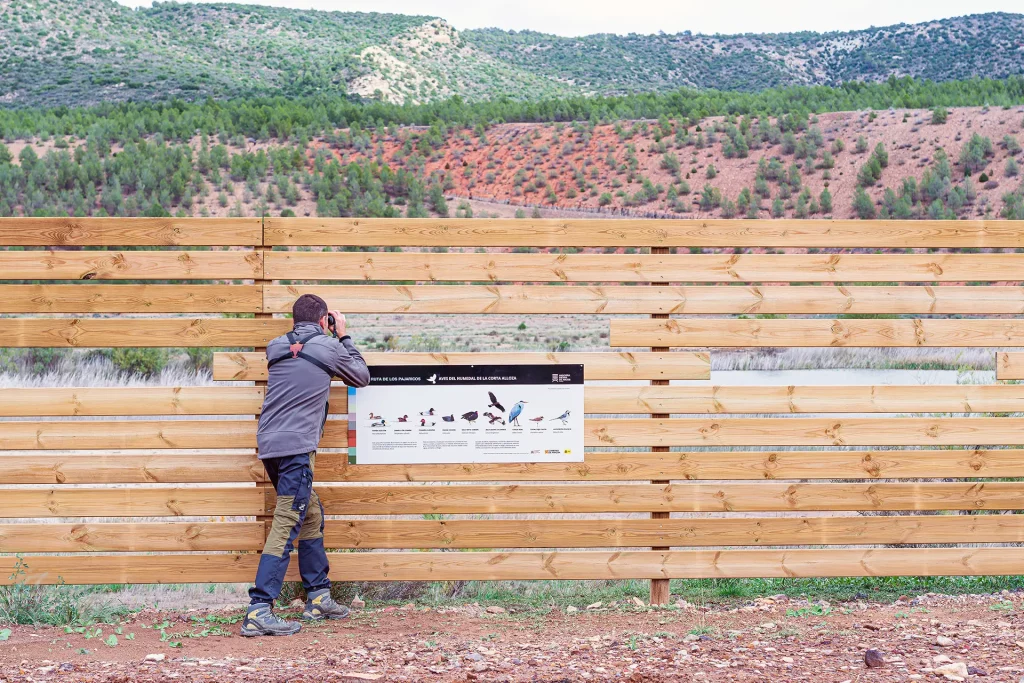
- Avoid disturbing the birds, especially during the breeding season.
- Do not destroy or alter their habitat to obtain a better observation or photograph.
- Avoid scaring away incubating adults, as this could ruin the chance of a successful hatching of chicks. Do not manipulate nests with eggs or chicks.
- Wildlife observation or photography is an essential tool for inspiring the protection of wildlife.
Cabezo Gordo viewpoint
Located in a magical place, in the heart of the Maestrazgo region of Teruel, this route is perfect for relaxing and enjoying the tranquillity and beauty of the landscape.
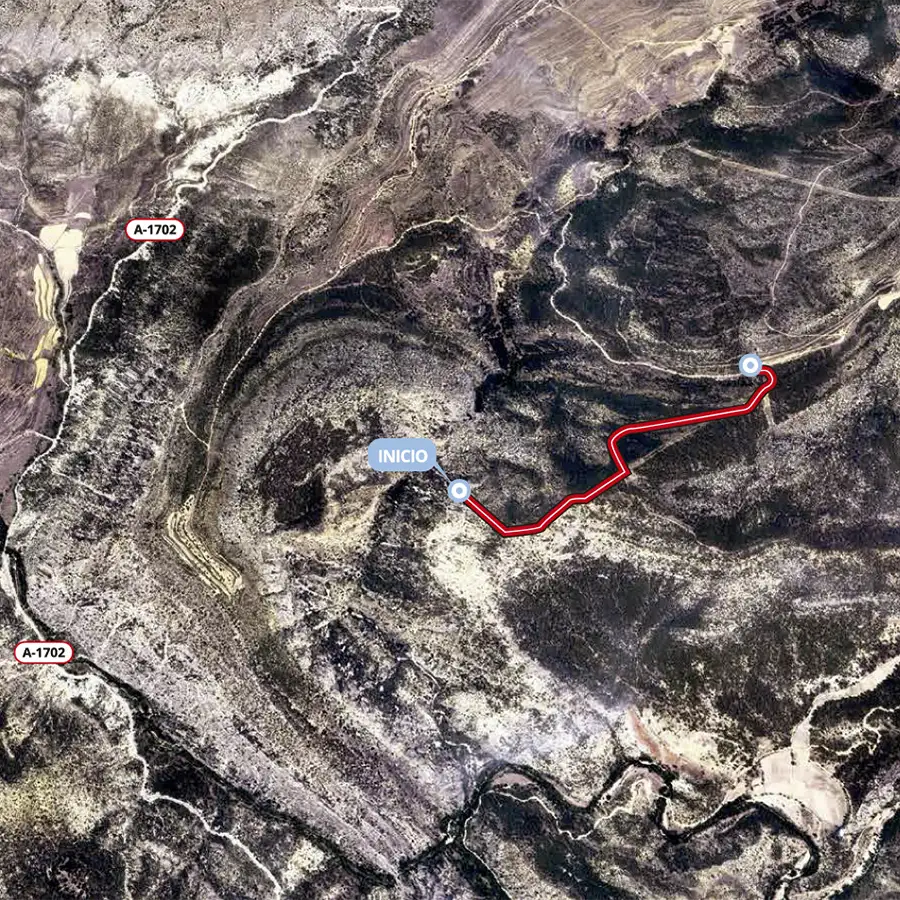
Access: From Ejulve, continue along the A-1702 road towards Villarluego until kilometre 20. Opposite the old information point for the Masías de Ejulve (closed), take the track (signposted) that leads to the Masía de los Barrancos and the Cueva Muñoz and, further on, to the starting point of the route.
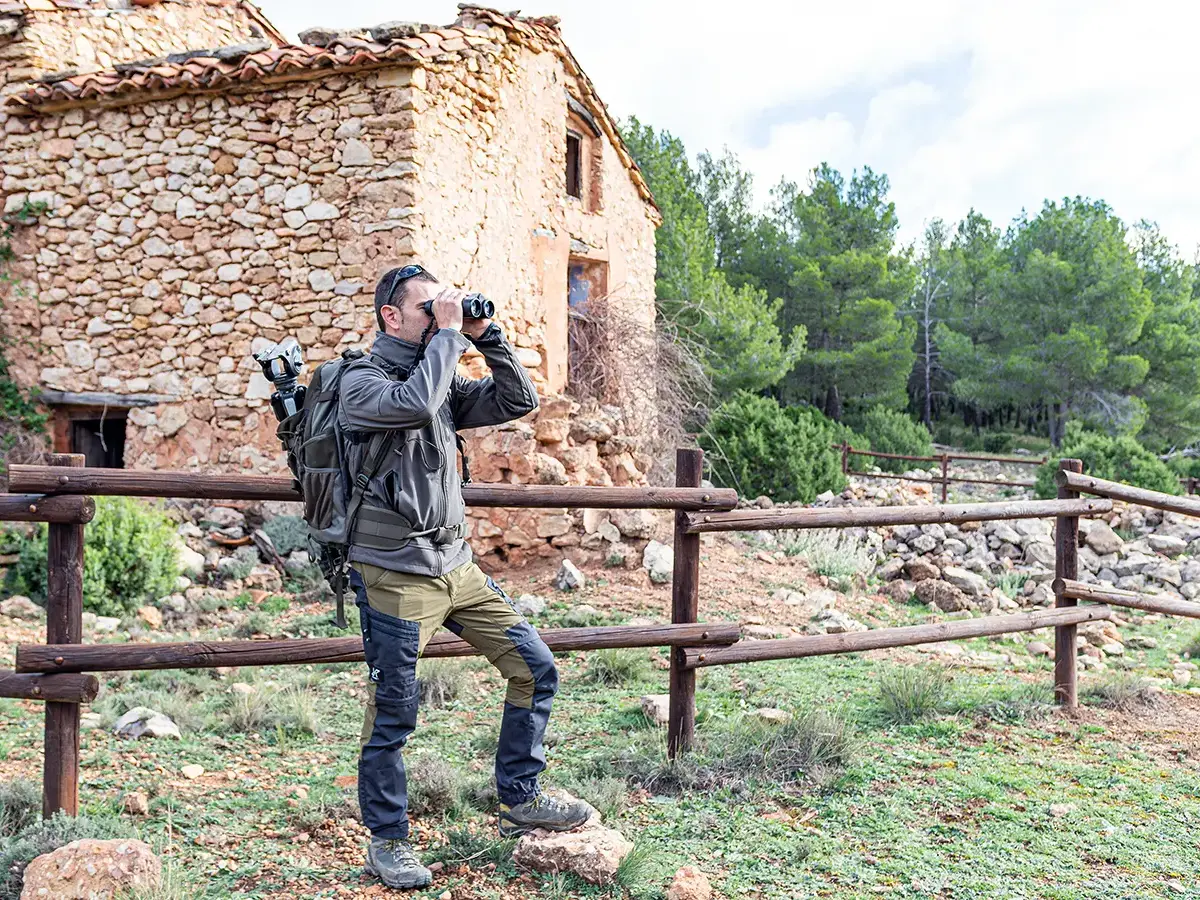
100 m from the car park a chain prevents vehicles from passing through. The track climbs gently, leaving a detour (GR 8.1) to the left that leads to Puente del Vado. After passing by Masía del Pecino, you cross a pine forest, the result of reforestation carried out in the 1950s and 1960s. This area is full of small forest birds: Coal Tits, Blue Tits, Treecreepers… In winter, Brambling, Redwing and Fieldfare are common.
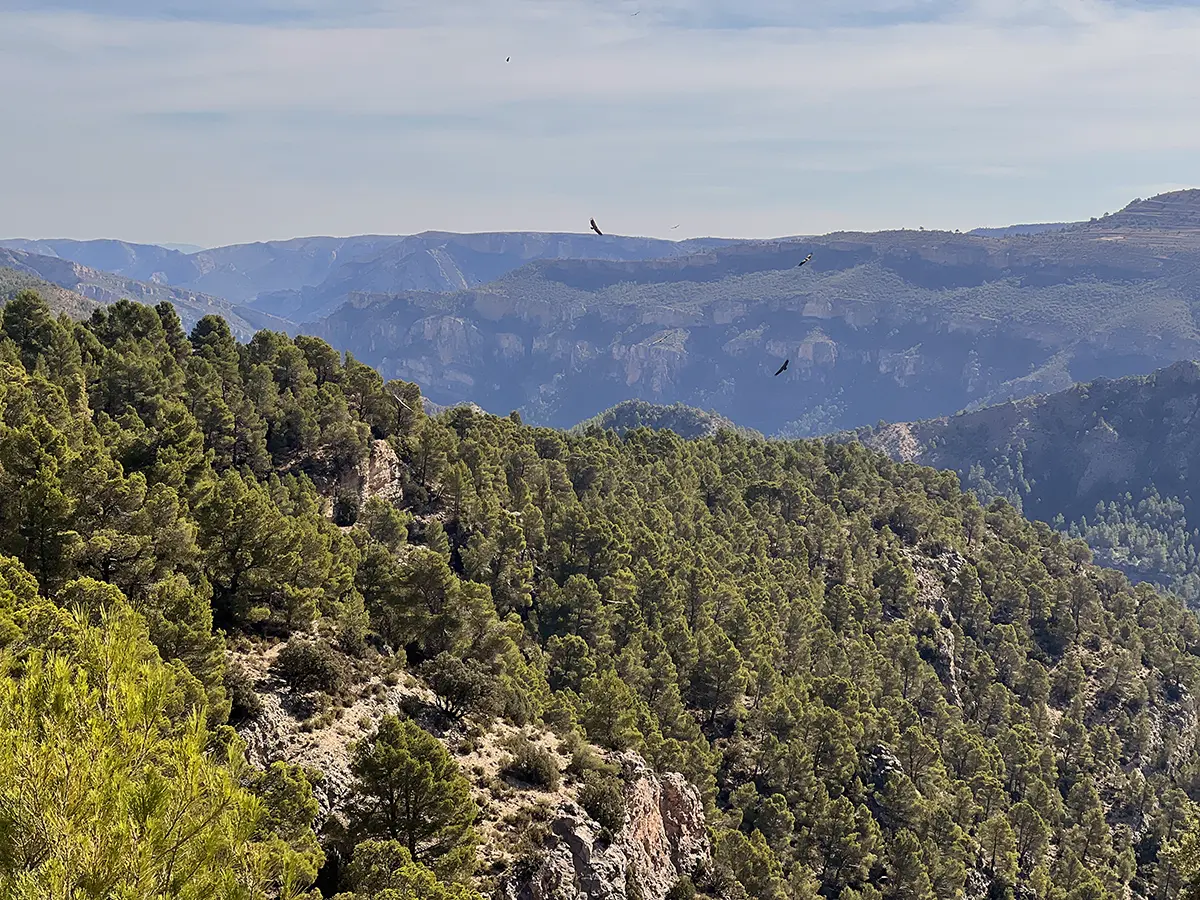
The route continues to the Cabezo Gordo farmhouse. At the end of the climb you will find the first of the viewing points, which offer impressive views of the Guadalope River, Villarluengo and a good part of the Maestrazgo mountain range.
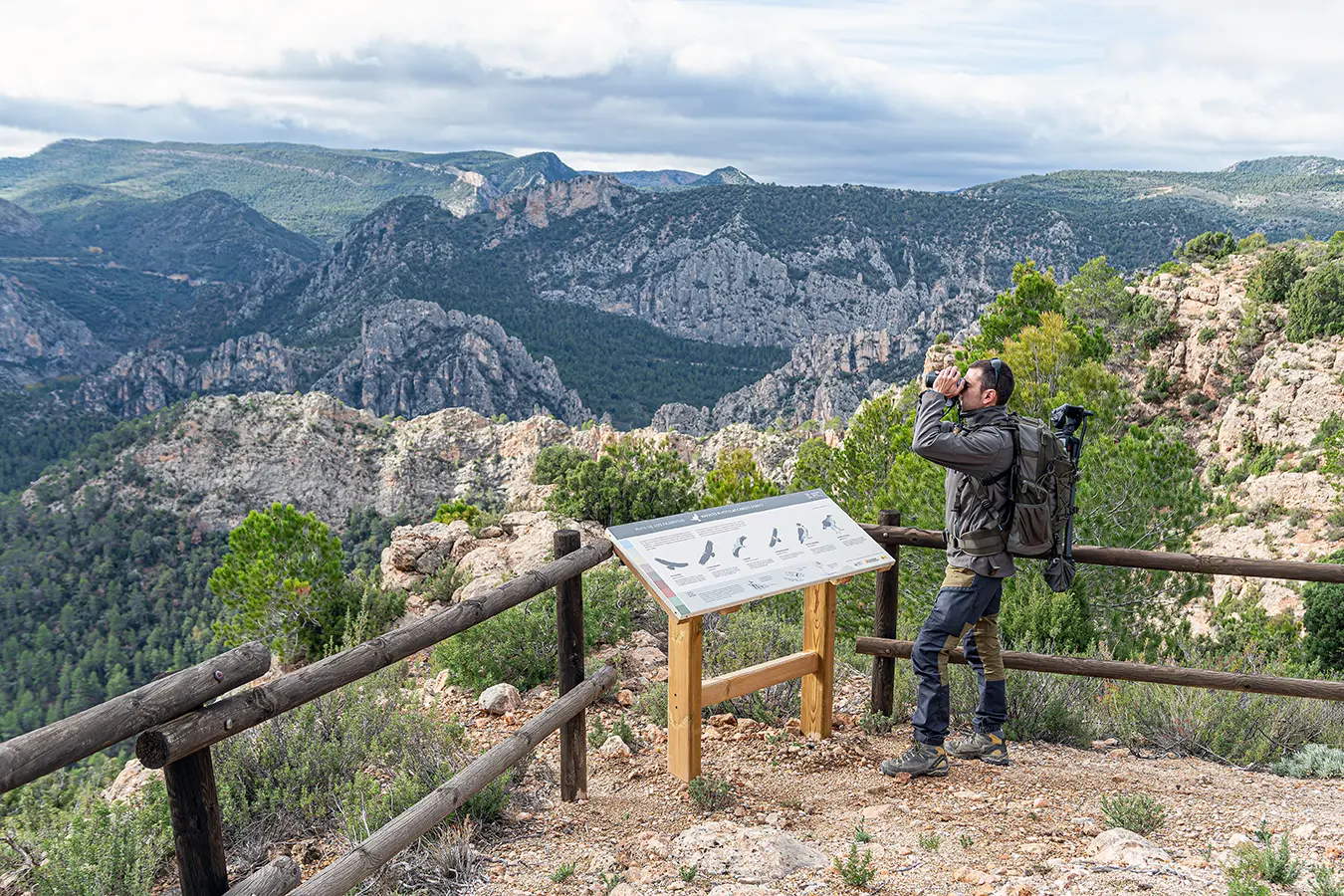
There will be large birds of prey overhead as well as other rock birds such as crag martins and swifts. At the end of the track, a short stretch of path descends to the birdlife viewing point, from where we can admire the view of the Cueva Muñoz ravine, steeply sloped terrain very close to the Órganos de Montoro.
Birds that can be found on the route:
Forest and rock birds: Great Tit, Coal Tit, Blue Tit, Crested Tit, Eurasian Treecreeper, Skylark, Woodlark, Chaffinch, Brambling, Redwing, Fieldfare, Black Redstart, Chiffchaff, Blackcap, Sardinian Warbler, Thekla Lark, Spotted Flycatcher, Pied Flycatcher, House Martin, Barn Swallow, Crag Martin, Common Swift and Alpine swift.
Birds of prey: Griffon Vulture, Goshawk, Sparrowhawk, Peregrine Falcon, Egyptian Vulture, Bearded Vulture, Short-toed Snake Eagle, Booted Eagle, Little Owl, Tawny Owl.

MIDE

Duration: 1 h

Height gained (+): 80 m

Height lost (-): 80 m

Distance: 3 km

Type of route: Round trip

Harshness of the environment: 2

Finding your way: 2

Difficulty underfoot: 2
Effort needed: 1
* Summer conditions, no snow, timings according to MIDE criteria, without stops over the whole route.
Cabezo Gordo viewpoint
Located in a magical place, in the heart of the Maestrazgo region of Teruel, this route is perfect for relaxing and enjoying the tranquillity and beauty of the landscape.
Access: From Ejulve, continue along the A-1702 road towards Villarluego until kilometre 20. Opposite the old information point for the Masías de Ejulve (closed), take the track (signposted) that leads to the Masía de los Barrancos and the Cueva Muñoz and, further on, to the starting point of the route.
100 m from the car park a chain prevents vehicles from passing through. The track climbs gently, leaving a detour (GR 8.1) to the left that leads to Puente del Vado. After passing by Masía del Pecino, you cross a pine forest, the result of reforestation carried out in the 1950s and 1960s. This area is full of small forest birds: Coal Tits, Blue Tits, Treecreepers… In winter, Brambling, Redwing and Fieldfare are common.
The route continues to the Cabezo Gordo farmhouse. At the end of the climb you will find the first of the viewing points, which offer impressive views of the Guadalope River, Villarluengo and a good part of the Maestrazgo mountain range.
There will be large birds of prey overhead as well as other rock birds such as crag martins and swifts. At the end of the track, a short stretch of path descends to the birdlife viewing point, from where we can admire the view of the Cueva Muñoz ravine, steeply sloped terrain very close to the Órganos de Montoro.
Birds that can be found on the route:
Forest and rock birds: Great Tit, Coal Tit, Blue Tit, Crested Tit, Eurasian Treecreeper, Skylark, Woodlark, Chaffinch, Brambling, Redwing, Fieldfare, Black Redstart, Chiffchaff, Blackcap, Sardinian Warbler, Thekla Lark, Spotted Flycatcher, Pied Flycatcher, House Martin, Barn Swallow, Crag Martin, Common Swift and Alpine swift.
Birds of prey: Griffon Vulture, Goshawk, Sparrowhawk, Peregrine Falcon, Egyptian Vulture, Bearded Vulture, Short-toed Snake Eagle, Booted Eagle, Little Owl, Tawny Owl.
MIDE
Duration: 1 h
Height gained (+): 80 m
Height lost (-): 80 m
Distance: 3 km
Type of route: Round trip
Harshness of the environment: 2
Finding your way: 2
Difficulty underfoot: 2
Effort needed: 1
* Summer conditions, no snow, timings according to MIDE criteria, without stops over the whole route.
RECOMMENDATIONS
- The welfare of the animals must come before all other considerations of any observer, amateur or professional.
- Avoid disturbing the birds, especially during the breeding season.
- Do not destroy or alter their habitat to obtain a better observation or photograph.
- Avoid scaring away incubating adults, as this could ruin the chance of a successful hatching of chicks. Do not manipulate nests with eggs or chicks.
- Wildlife observation or photography is an essential tool for inspiring the protection of wildlife.